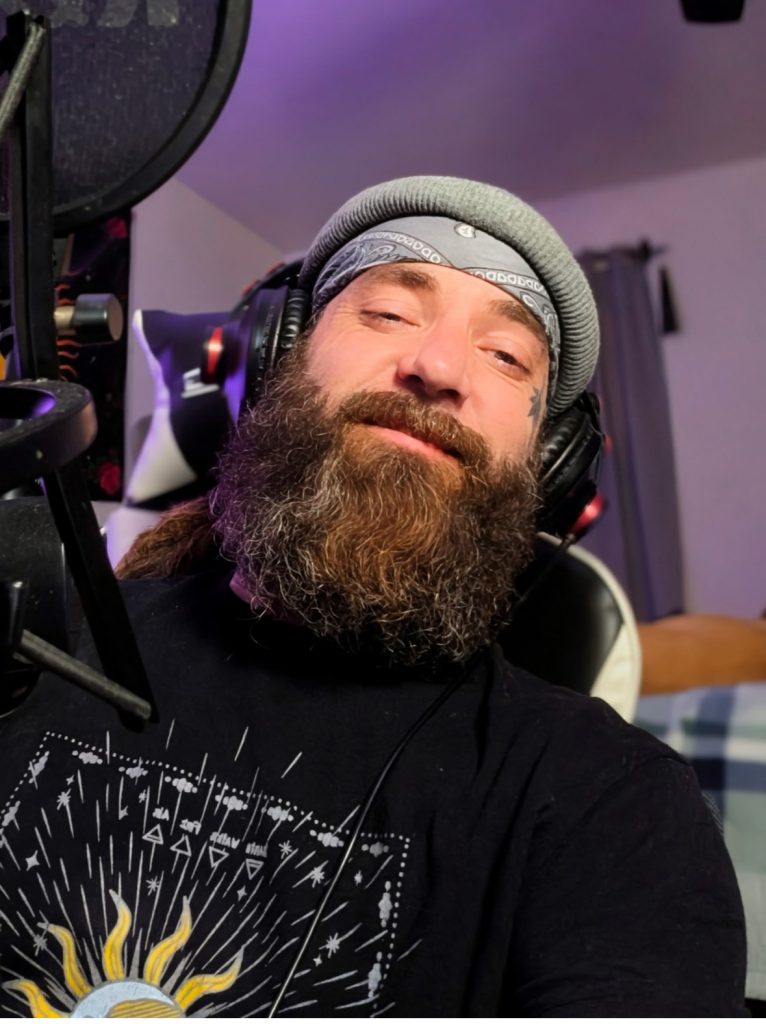
For Caspa Clark, music is more than bars and beats — it’s emotional survival. Blending introspection, sharp lyricism, philosophy, humor, and raw honesty, Caspa creates records that explore mental pressure, spirituality, human nature, and resilience without losing the energy and grit of hip-hop. Influenced by everything from classic rock and isolation in Maine to survival culture in Rhode Island, his sound feels like controlled chaos with purpose behind every word.
What part of your life do you think people hear the most in your music, even if you never directly say it?
Probably survival. Not just physically, but mentally. A lot of my music carries this tension between pressure and hope. Even when I’m talking about weed, society, relationships, or trippy thoughts, there’s usually an undercurrent of somebody trying to stay human while the world keeps trying to harden them.
When people hear your name for the first time, what do you want them to associate you with besides music?
Authenticity and depth. I want people to feel like I actually lived what I’m talking about. Not manufactured. Not pretending to be invincible. Somebody who can speak on struggle, growth, creativity, spirituality, and still bring humor and energy into it too.
What environment or experience shaped your sound the most?
Honestly, contrast shaped my sound. Growing up in Maine around classic rock and isolation, then moving into the hood in Rhode Island and discovering hip-hop survival culture. Then homelessness after that. My sound became this collision of pain, philosophy, weed smoke, humor, boom bap, and trying to understand people.
A lot of artists rap about where they’re from. What does your story say about where you’re going?
That evolution is possible even when your foundation was cracked early. I’m trying to turn survival into legacy now. I don’t just want to escape my situation — I want to build something that outlives me.
What’s something about your creative process that would surprise people?
People probably think I rapid-fire write because of the flow style, but I spend a lot of time thinking about emotion, rhythm, and psychology. I’ll sit with a line until it feels alive. My brain is kind of always writing in the background like static from another dimension.
Do you feel like your music is more about self-expression, proving something, or building something bigger?
At first it was survival and self-expression. Then proving myself. Now it feels bigger than me. I want the music to help people process life differently and feel understood instead of judged.
What’s one lesson life taught you early that still shows up in your work?
People can lose themselves fast when they stop feeling connected. A lot of my music revolves around reconnecting people to emotion, creativity, spirit, truth, and humanity. Pain unattended can turn people cold, and I never wanted my art to become cold.
How do you balance relatability while still telling your personal truth?
I focus more on emotions than events. Not everybody lived my exact story, but almost everybody knows loneliness, pressure, confusion, wanting more, or trying to heal. If you tell the emotional truth honestly enough, people naturally find themselves in it.
What motivates you most right now?
Responsibility. I love music deeply, but responsibility sharpened it. Having kids, family depending on me, and realizing how fragile stability really is changed everything. Music stopped being just passion and became purpose.
When somebody finishes listening to your music, what feeling do you hope stays with them?
That they’re not trapped inside the version of themselves life tried to reduce them to. I want people to feel energized, reflective, understood, and maybe a little more awake afterward — like even in darkness there’s still some strange beautiful frequency worth tuning into.
Caspa Clark’s music exists somewhere between survival guide, therapy session, and philosophical reflection. Through layered storytelling, emotional honesty, and vivid imagery, he creates records for people navigating pressure, isolation, growth, and healing in real time. Instead of masking struggle, he leans into it — turning pain, chaos, and experience into something listeners can not only hear, but genuinely feel.